
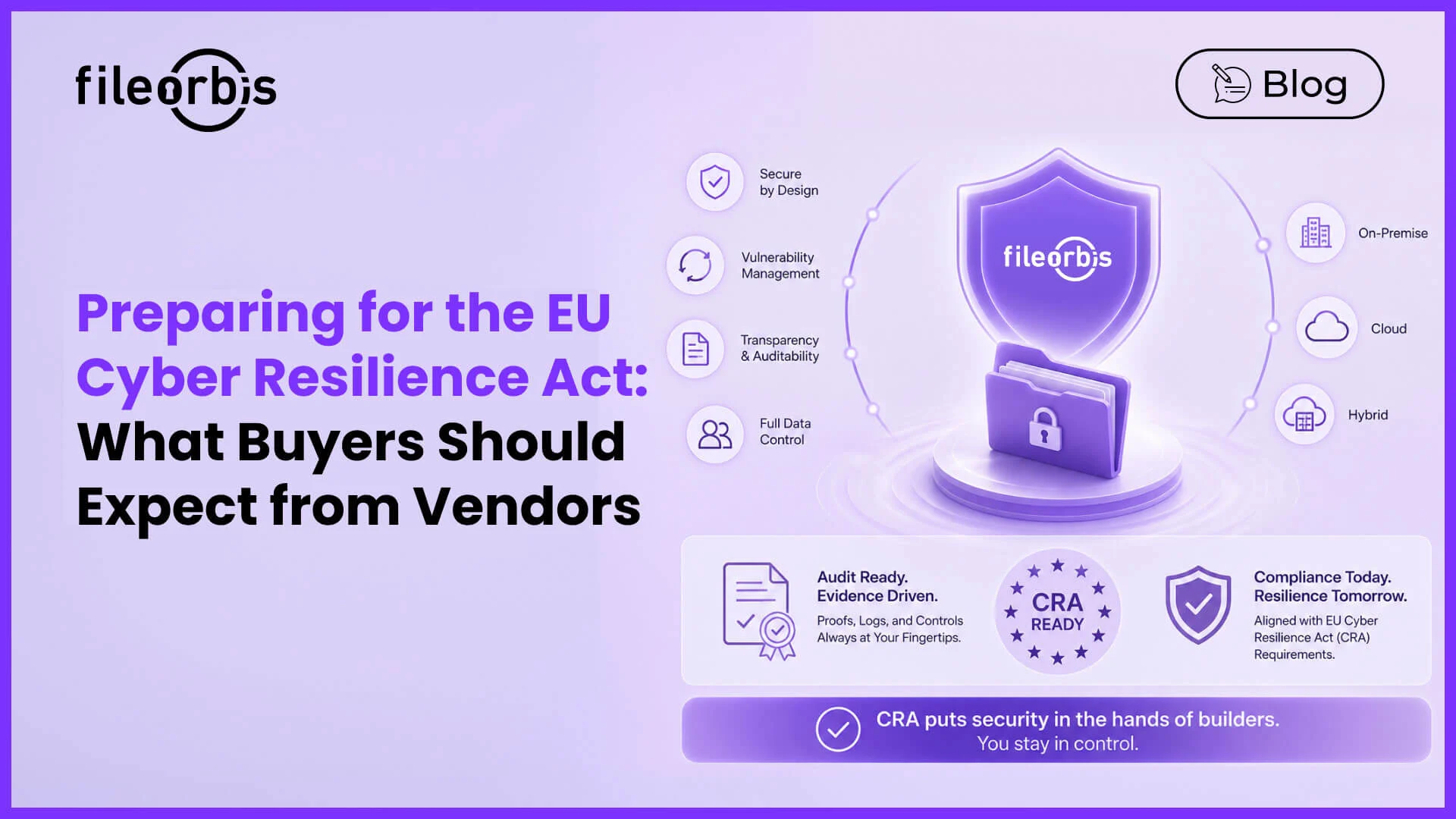
Preparing for the EU Cyber Resilience Act: What Buyers Should Expect from Vendors
Most cybersecurity regulation tells organizations how to protect themselves. The EU Cyber Resilience Act does something different and overdue: it tells the makers of products that their products must be secure in the first place. It puts cybersecurity obligations on manufacturers of products with digital elements, including hardware and software placed on the EU market, across the whole product lifecycle, with the main obligations phasing in toward 2027.
If you procure software for a regulated enterprise, the CRA changes your job in a subtle but important way. The security posture of the tools you buy is becoming a legal property of those tools, not just a hopeful line in a contract.
What the CRA Is Really About
Strip away the legal text and the CRA pushes a handful of common-sense expectations onto vendors:
- Secure by design and default: Products should be designed and built to be secure, following secure-by-design and secure-by-default principles, rather than being shipped open and hardened later by the customer.
- Vulnerability management: Vendors should handle vulnerabilities responsibly: identifying them, fixing them, and disclosing them through the product’s supported life.
- Transparency: There should be transparency about what’s in the product and how it’s maintained.
For buyers, the practical effect is leverage. “Is this product secure by design? How do you handle vulnerabilities? How long will you support it?” stops being a nice-to-have in a security questionnaire and becomes a question the regulation expects vendors to be able to answer.
What to Ask Your File Platform Vendor
A file governance or collaboration platform sits in a sensitive position because it touches a lot of your most regulated data. It is exactly the kind of product where secure-by-design matters.
A few questions worth putting to any vendor in this space, CRA or not:
- Is the product secure by default, or does safe operation depend on the customer getting a long hardening checklist right?
- Can it be deployed in a way that keeps data under the customer’s control and within required jurisdictions, rather than forcing it into the vendor’s cloud?
- Does it have a clear vulnerability-handling and update process across a defined support lifetime?
- Does it generate the audit evidence you’ll need to demonstrate your own compliance downstream?
The CRA effectively makes good answers to these the baseline rather than the exception.
Why This Favors Governed, Deployable Platforms
The CRA’s direction of travel rewards a particular kind of product: one designed for security and control from the start, deployable on infrastructure the customer governs, with proper lifecycle maintenance.
FileOrbis fits that posture. It is built for on premises, cloud, or hybrid deployment so sensitive data can stay where regulation requires, with the access control, encryption, and audit capabilities that let customers demonstrate their own compliance rather than inherit a vendor’s risk.
The broader point is that as the CRA takes hold, “we’ll bolt security on later” becomes a harder story for any vendor to tell. Products that were architected around control have less to retrofit.
The Takeaway
The Cyber Resilience Act shifts part of the security burden where it belongs, onto the makers of the products organizations depend on. For buyers, it’s a license to demand more: secure-by-design, responsible vulnerability handling, deployment control, and real evidence.
When you’re choosing tools that will handle your regulated data, those are exactly the questions worth asking now, well ahead of the CRA’s deadlines, because they’re good questions regardless of the regulation forcing them.
Evaluating vendors with the CRA in mind? Talk to FileOrbis about deployment, control, and security posture.
General information, not legal advice. Refer to the official Cyber Resilience Act text for definitive obligations and timelines.

Gamze Karslı
Head of Marketing
Subscribe to our Newsletter
About FileOrbis
Aiming to manage the user and file relationship within an institutional framework, FileOrbis is constantly being developed in order to meet different industry and customer needs in terms of file management and sharing. Since 2018, FileOrbis continues to be developed with the excitement of the first day. FileOrbis focuses on high security, rich integration, ease of use and integrated management criteria.